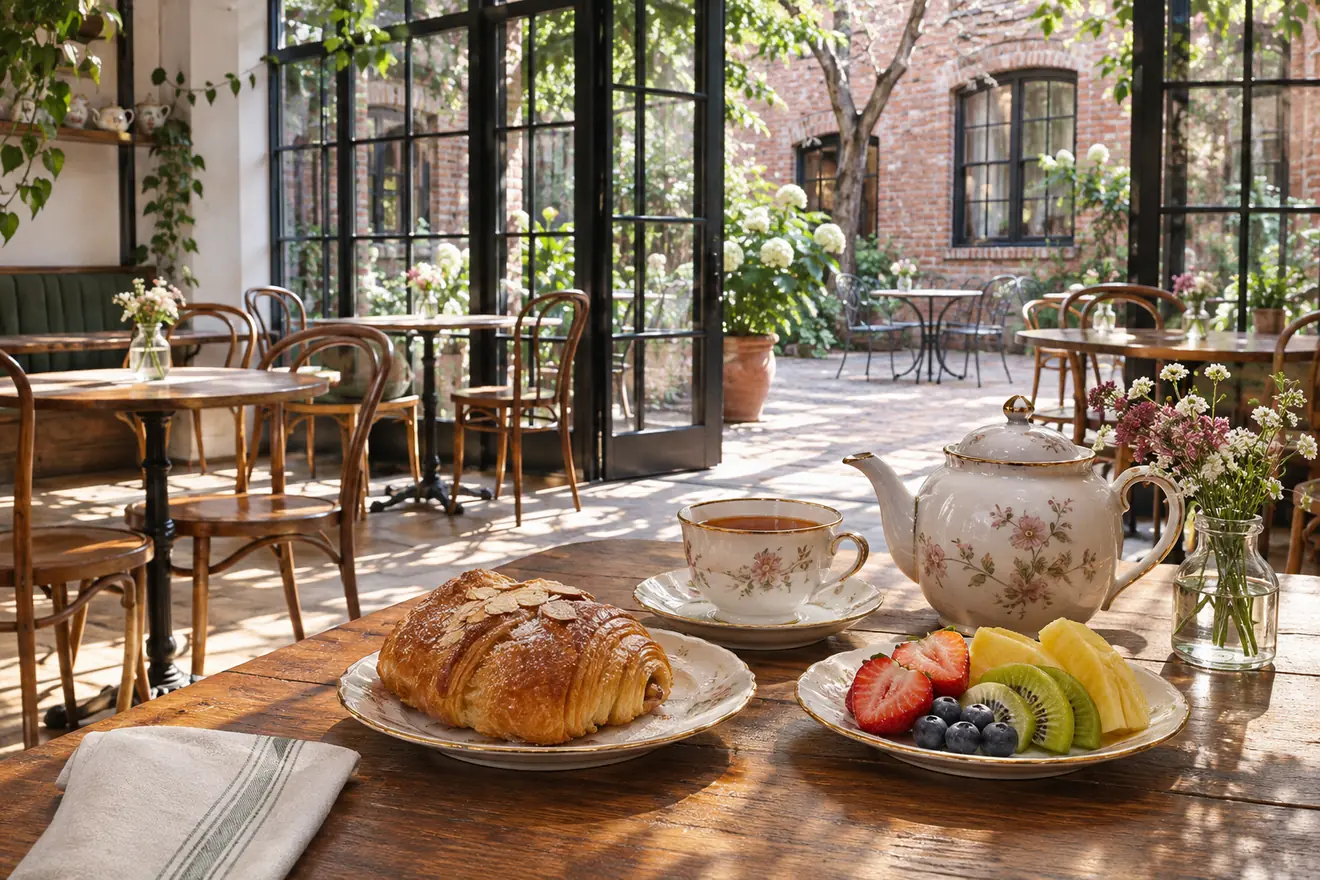
Brooklyn has turned Sunday brunch into something approaching a civic institution. The ritual is well-established by now: you roll out of bed around eleven, text the group chat, pick a spot in Williamsburg or Park Slope or Carroll Gardens, and then stand on a sidewalk for the better part of an hour waiting for someone to call your name and hand you a Bloody Mary and an overpriced egg dish. For many people, that wait is the least enjoyable part of the week dressed up as leisure. The good news is there is a genuinely better way to spend a Sunday morning in Brooklyn, and it has been sitting in your neighborhood the whole time.
The Sunday Brunch Problem in Brooklyn
To be fair: brunch is not the problem. The food at the best Brooklyn brunch spots is often excellent, the vibe can be fun, and there is something communal about the city collectively deciding that Sunday morning belongs to eggs and conversation. But the experience has a structural flaw that tends to go unexamined. When you add up the time it takes to get ready, travel to the restaurant, wait for a table, eat, pay, and get home, you have consumed the better part of a Sunday doing something that was supposed to be restorative.
The wait is the most visible problem. Popular brunch spots in Brooklyn regularly post wait times of forty-five minutes to over an hour on weekends. That time is spent standing outside, usually on a sidewalk, often in weather that is not cooperating, refreshing a waitlist app. It is not restorative. It is not leisurely. It is a queue, and queues are the opposite of a Sunday morning.
Then there is the noise. A packed brunch restaurant on a Brooklyn weekend is loud in the particular way that large groups talking over each other, combined with the clatter of a busy kitchen and a DJ who has misjudged the room, produces. If you arrived hoping to have a real conversation, or to sit quietly with your thoughts, you are probably not going to get that.
None of this is a reason to swear off brunch forever. But it does suggest that the Sunday morning ritual deserves a wider menu of options. A neighborhood tea house is one of the most underrated of them.
What a Tea House Sunday Actually Feels Like
Walking into a neighborhood tea house on a Sunday morning is a different kind of arrival. There is usually no hostess stand, no waitlist and no one writing your name on a clipboard. You walk in, find a seat and soon have a warm cup in front of you. A good room has the particular quality of a space that is occupied but not crowded, with an ambient murmur that is pleasant rather than overwhelming.
The pace is different in a way that takes a few minutes to settle into. You are not being turned over. No one is waiting for your table. You can sit with one cup of tea for two hours if that is what the morning calls for, and the experience is designed around that possibility rather than in spite of it. This is not negligence on the part of the staff; it is a deliberate feature of what a tea house is.
The light on a Sunday morning in a neighborhood tea house is usually good. These spaces tend to have windows that catch the morning sun, and the absence of the dinner-service overhead lighting that makes restaurants feel bright but somehow draining means you get actual daylight. If it is winter and the sun is low, the warmth of a ceramic cup in both hands is part of the experience in a way that a paper cup never manages to be.
There is also something about arriving without a reservation, without a plan, without the social weight of a group booking, that makes the morning feel lighter. You showed up. You are here. That is enough.
The Morning Drink Question
People who have only ever encountered tea as the thing they drink when they are sick, or as the iced syrup-sweetened version at a chain, sometimes assume that a tea house does not have a morning drink worth making the switch for. This is a misconception worth addressing directly, because a good tea house menu has options built for exactly the transition from sleep to the day.
Black Tea: The Morning Workhorse
Black tea is the most direct answer for anyone who relies on caffeine to start the day. A well-brewed cup of Assam, Darjeeling first flush, or a good English Breakfast style blend contains meaningful caffeine, though generally less than a standard drip coffee. What it also contains is L-theanine, an amino acid that occurs naturally in tea leaves and that research has consistently associated with a smoothing effect on caffeine's stimulant properties. The combination tends to produce alertness without the jitteriness or the sharp crash that strong coffee can bring to some people.
The practical result is that a Sunday morning with a pot of black tea often feels energized but calm in a way that makes it easier to actually think, read, write, or have a real conversation. For Sunday mornings, when the goal is restored rather than wired, that distinction matters more than it might during a weekday.
Oolong: The Middle Ground Worth Knowing
If you have not spent much time with oolong, Sunday morning is a good introduction. Oolong teas sit between green and black in terms of oxidation, which translates into a wide range of flavors - from the lightly floral and grassy end of the spectrum to the roasted, almost caramel-adjacent varieties. Many people find oolong easier on the stomach first thing in the morning than a full black tea, and the flavor tends to reward attention in a way that invites slowing down.
A well-steeped oolong, particularly a traditional-style Taiwanese or Fujian variety, is the kind of drink that makes you want to look out a window for a few minutes. On a Sunday morning in Brooklyn, that is precisely what you should be doing.
Green Tea and the Gentle Start
For those who find coffee or even black tea too much in the morning, green tea offers a gentler caffeine curve combined with a flavor profile that varies enormously by origin and preparation. Japanese greens tend toward the savory and umami-adjacent; Chinese greens often have a lighter, slightly sweet quality. Neither is a replacement for coffee in the same way black tea is, but both are genuinely pleasurable morning drinks in their own right rather than consolation prizes.
The key with green tea is water temperature. A good tea house will brew it correctly - water that is too hot turns green tea bitter, which is likely where the reputation for green tea being unpleasant comes from for many people. When it is brewed well, it is mild, interesting, and pairs surprisingly well with something sweet alongside it.
Coffee Is Still on the Table
Many tea houses also serve coffee, and the better ones take it seriously. If you are not ready to switch to tea on a Sunday morning, or you want to start with a coffee and move to tea as the morning goes on, that is a perfectly reasonable approach: a coffee first to wake up, then a pot of something interesting to settle into the morning. The switch is easier when neither option feels like a compromise.
The Food Situation
A common and reasonable question is whether a tea house can actually feed you on a Sunday morning. The answer at most tea houses is yes, though the food usually exists in a different register than a full brunch service, and understanding that difference is what makes it work rather than feel like a shortcoming.
The pastries, baked goods, and lighter items that anchor a tea house food menu are designed to complement the drink experience rather than to be the main event. A scone with your Darjeeling, something sweet alongside a green tea, a savory bite that pairs with an oolong - these are not lesser options than a stack of pancakes. They are a different kind of eating: more considered, less filling-to-the-point-of-needing-a-nap.
Many people who make Sunday tea house mornings a regular habit report that they eat less but enjoy it more. The pace of the experience, and the focus on the drink itself, shifts attention away from consumption and toward something more like appreciation. By the time you leave, you are neither overfull nor hungry. That tends to be a good place to be on a Sunday afternoon in Brooklyn.
Who Sunday Morning at a Tea House Is For
The honest answer is that it works for a wider range of people and situations than you might expect.
The Solo Sunday
Going to brunch alone is socially complicated in a way that going to a tea house alone simply is not. A restaurant built around the energy of groups filling its tables makes a single person feel conspicuous in a way that a tea house does not. The tea house is designed around individual experience as much as shared experience. You can sit with a book, a notebook, your phone, or nothing at all, and the space accepts all of these choices without judgment.
Solo Sunday mornings at a neighborhood tea house have become a small ritual for a certain kind of Brooklynite who takes rest seriously. It is not antisocial; it is deliberate. The city is loud all week. Having a quiet, warm, slightly unhurried place to sit with a good cup of something is restorative in a way that goes beyond the caffeine content of what is in the cup.
Two People Who Actually Want to Talk
The noise level problem at a busy brunch spot is not trivial if the point of Sunday morning is to actually catch up with someone. Whether it is a partner, a close friend, a sibling visiting from out of town, or a conversation that needs some space to breathe, a tea house provides the acoustic conditions for a real exchange. You can hear each other. You are not competing with the table next to you.
There is also something about the pace of a tea house that encourages a different kind of conversation than the one you have over bottomless mimosas. When the drinks are slower, when you are waiting for a pot to steep, when there is no DJ and no crowd noise, the conversation tends to find its own level and stay there. Some of the best Sunday morning conversations in Brooklyn have happened over a second pot of oolong at a neighborhood tea house - which is a thing worth knowing before you book a brunch table for two.
The Small Group
Three or four people on a Sunday morning is the size where brunch gets expensive and logistically difficult. The wait for a table that fits four people at a popular Brooklyn spot is reliably longer than the wait for two. The bill, with cocktails and full plates, adds up in a way that can feel disproportionate to what you actually got out of the morning.
A small group at a tea house has a different math. You order what you want, the total stays reasonable, and you can stay as long as the conversation lasts without anyone checking the time or calculating whether a third round of drinks is justified. For the kind of Sunday gathering that is about catching up rather than making a statement about where you went, the tea house is often the smarter choice.
The Neighborhood Dimension
There is something worth naming about what it means to have a neighborhood tea house rather than a destination restaurant. When you walk to a place that is in your immediate vicinity, owned by people who know the block, and frequented by the same mix of local residents you recognize from other contexts, the morning has a different character than when you travel somewhere specifically for the purpose of eating.
A neighborhood tea house exists in a particular corner of Brooklyn, with its own neighbors, regulars and rhythms. The people behind the counter often know what is going on nearby, and the other people in the room are your neighbors. Sitting there on a Sunday morning is part of your local life in a way that traveling to a destination brunch spot in another neighborhood is not.
This matters more than it sounds. One of the things that gets lost in the constant search for the best new restaurant or the most talked-about brunch spot is the pleasure of a place that simply exists for you, in your neighborhood, as part of your regular life. That kind of place builds up meaning over time. It becomes the spot where something important was discussed, where a decision was made, where you spent a Sunday morning that turned out to be one of the good ones.
The great Brooklyn brunch spots have their own energy and they earn it. But the neighborhood tea house earns something different: continuity. And on a Sunday morning, continuity might be more valuable than spectacle.
Building a Sunday Tea Ritual
The first time you spend a Sunday morning at a tea house instead of queuing for brunch, it might feel slightly unfamiliar. You are accustomed to the momentum of the brunch ritual, the commitment of choosing a spot, the social weight of the group booking. A tea house Sunday is lighter in texture, and that lightness takes a morning or two to fully appreciate.
By the third or fourth time, something shifts. You start to have preferences: a particular tea you tend to order first, a table you prefer if it is available, a loose sense of how long you want to stay and what you want to do while you are there. The ritual builds itself around the regularity. This is what neighborhood places are for, and it is what makes them different from destinations you visit once and cross off the list.
Things That Work Well Alongside Tea on a Sunday Morning
- A physical book, particularly one you have been meaning to get to for weeks. The pace of a tea house Sunday morning is exactly right for sustained reading in a way that most weekday environments are not.
- A notebook - not for productivity, but for the kind of writing that happens when you have an hour and nothing pressing. Observations, ideas that surface when the week's noise clears, letters you might or might not send.
- The Sunday crossword. This combination has a long and respectable history for good reason.
- A friend who also needed somewhere quiet to sit. The constraint of a conversation-friendly environment tends to produce better conversations than a noisy one.
- Absolutely nothing except the tea. This is an underrated option that the city does not give you many settings for.
The Practical Side: What to Know Before You Go
A few things that make a Sunday tea house morning go smoothly, particularly if it is your first time approaching it this way.
Timing
A neighborhood tea house tends to have its own Sunday rhythm, and it is worth getting a feel for it after a visit or two. Early Sunday mornings - before ten, say - often have a particular stillness that is worth experiencing at least once. Mid-morning picks up as the neighborhood wakes up and people come in after a walk or a run. Arriving without a fixed end time is better than arriving with one, since the experience tends to expand to fill the space you give it. This is rare in New York City and worth protecting.
How to Order
If you are new to loose-leaf or specialty tea, do not hesitate to ask for a recommendation. The staff at a good tea house have specific opinions and are generally happy to share them. Tell them what you usually drink, what you are in the mood for, or what you want the morning to feel like, and they will point you toward something appropriate. There are no wrong answers, but there are definitely better ones for a given morning and a given person.
If you are ordering tea by the pot rather than the cup, you will often get multiple infusions out of a good loose-leaf tea. This means your morning drink naturally extends into a second or third cup without additional cost, which is both economical and structurally encouraging for a longer, more relaxed stay.
Expectations vs. Reality
A tea house Sunday morning is not a brunch Sunday morning, and the experience is better when you do not try to make it one. The food is lighter, the energy is quieter, the experience is less performative. If you arrive expecting to replicate the full brunch experience in a different setting, you will miss what is actually on offer. If you arrive open to a genuinely different kind of morning - slower, more personal, more restorative - you will almost certainly find that.
Many people who discover the Sunday tea house morning describe the feeling as similar to a small vacation within their own neighborhood. You have left your apartment, you are in a pleasant space that is not yours, something warm and good is in front of you, and you have nowhere you are required to be. That feeling - which brunch restaurants approximate but rarely fully deliver because of the noise and the waiting and the turning of tables - is what a neighborhood tea house is built to provide.
A Note on the Brunch Queue
There will still be mornings when the full brunch experience is exactly right. When a group of eight needs a table and a celebration and a reason to be together in a specific way, a restaurant that can hold all of that energy is the right choice. When you have visitors from out of town and want to show them one of the great Brooklyn spots, the best brunch places here are worth experiencing at least once.
But there will also be Sunday mornings when you do not want to plan anything, when the idea of a forty-five-minute wait feels like a tax on the morning, when what you actually need is somewhere nearby that is warm and quiet and serves something worth drinking. That is the morning a neighborhood tea house was made for. That morning comes around more often than you might think, particularly if you live in Brooklyn and the week has been a long one.
The queue will be there next Sunday if you want it. The tea house is there now.
Frequently Asked Questions
What time is a good time to arrive at a tea house on a Sunday morning?
Sunday mornings at a neighborhood tea house tend to be quietest before ten and pick up gradually through mid-morning. If you want the most peaceful experience, arriving earlier works in your favor. That said, unlike a brunch restaurant, you are unlikely to find yourself unable to sit down even at peak morning hours. Check current hours with the tea house before heading over, since seasonal hours can vary.
What tea is a good choice for someone who normally drinks coffee in the morning?
Black tea is the most natural starting point for coffee drinkers. A well-brewed Assam or breakfast-style blend delivers meaningful caffeine alongside L-theanine, which tends to produce a calm, focused alertness rather than the sharp spike-and-crash some people experience with strong coffee. If you want to stay closer to roasted flavor territory, ask about any roasted oolong options. The staff can walk you through what is available and what might suit your usual morning preference.
Is a neighborhood tea house a good option for a solo Sunday morning?
A neighborhood tea house is arguably the best solo Sunday morning option in Brooklyn. Unlike a brunch restaurant built around groups, a tea house accommodates one person as naturally as it accommodates four. You can read, write, work lightly, or simply sit without feeling like you need to justify taking up the space. Many regulars find a solo Sunday morning at a tea house one of the more restorative habits they have built into the week.
Can I bring my laptop or a book on Sunday morning?
A book is always welcome and genuinely well-suited to the pace of a tea house Sunday morning. For laptops, it is worth checking in with the staff about what works on a given day. Sunday mornings tend to have a more social and relaxed character than a midweek work session, and the etiquette favors reading and conversation over extended heads-down work. Light use is generally not an issue - use your judgment based on how full the space is and what kind of morning the room seems to be having.
How is the food at a tea house different from brunch?
Tea house food is built to complement the drink experience rather than to be a full meal in itself. Expect baked goods, pastries, and lighter savory options rather than plates of eggs, sides, and cocktails. This is a different approach to what eating in the morning can be, not a lesser one. Many people find that a good scone or pastry alongside a pot of tea is exactly the right amount of food for a Sunday morning, and they leave comfortable rather than overfull. If you need a substantial meal before a long day, factor that in before visiting.
How do I know what to order if I am new to specialty tea?
Ask. Staff at a good tea house usually know the menu well and are used to helping people navigate it. Telling them what you usually drink, what flavors you like, or simply how you want to feel over the next two hours will get you to a good choice quickly. You do not need to have done any research before arriving. Part of what a good neighborhood tea house offers is the expertise to help you find something you will genuinely enjoy, whether it is your first time in or your fiftieth.
If you are new to tea, start with our guide to translating your coffee order into tea, and check a tea house's current hours and menu with the house itself before you go.