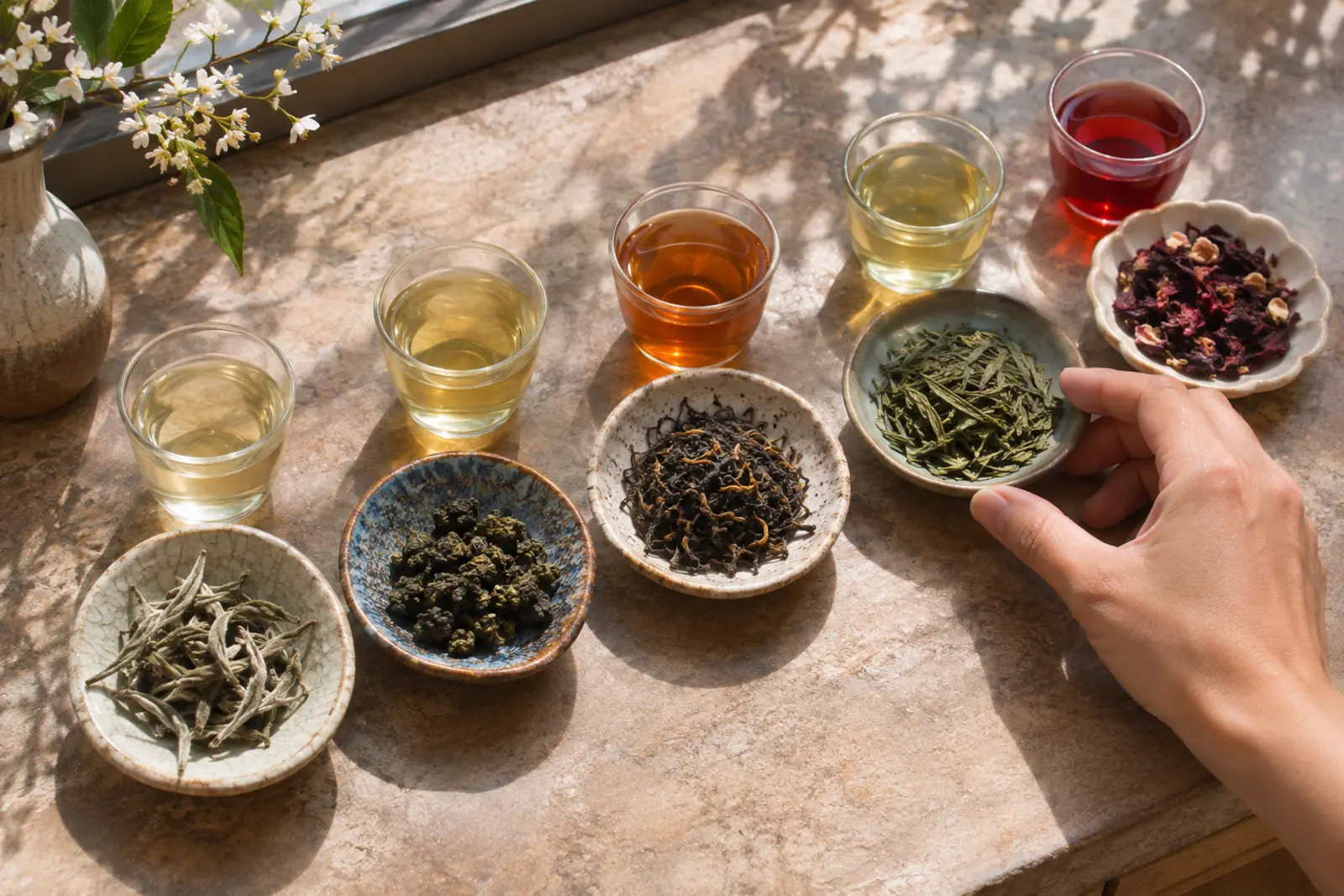
To read a tea menu, look for four things: the type of tea (white, green, oolong, black, dark or herbal), its origin (single origin or blend), how it is served (loose leaf by the pot, a bag, or a latte) and whether it contains caffeine. Everything else on the menu, from first flush to hojicha, is a detail about one of those four.
A tea menu can look like a wine list written in five languages, but the vocabulary is short. This guide explains the terms you are most likely to see, so you can order with confidence or ask better questions.
The main types of tea
All true tea comes from the same plant, Camellia sinensis. The differences come mostly from processing, and above all from how much the leaves are allowed to oxidize.
| Type | How it is made | What to expect |
|---|---|---|
| White | Young buds or leaves, minimally processed and dried | Delicate, light, often naturally sweet |
| Green | Heated soon after picking (pan-fired or steamed) to stop oxidation | Fresh, grassy or toasty; Japanese greens are often savory |
| Oolong | Partly oxidized, across a wide range | From floral and light to roasted and rich |
| Black | Fully oxidized | Malty and brisk, takes milk well (Assam, Darjeeling, Ceylon) |
| Pu-erh and other dark teas | Fermented or aged after processing | Earthy, smooth, deep |
| Herbal (tisane) | Flowers, fruit, roots or herbs, with no tea leaf | Usually caffeine-free: chamomile, rooibos, peppermint, hibiscus |
Menus sometimes list yellow tea as well, a style that is not wilted or oxidized but is allowed to turn yellow. Pu-erh, a dark tea, takes its name from Yunnan in southwestern China.
Tea menu terms explained
- Loose leaf: whole or broken leaves brewed in a pot or infuser rather than a bag, usually with more flavor and room for more than one infusion.
- Single origin or single estate: tea from one region or one garden rather than a blend.
- Blend: teas mixed for a consistent taste. English Breakfast and Earl Grey (black tea scented with bergamot) are classic blends.
- First flush and second flush: harvest seasons, most often used for Darjeeling. The spring first flush tends to be lighter; the summer second flush is fuller.
- Matcha: powdered Japanese green tea whisked into water or milk, so you drink the whole leaf.
- Hojicha: roasted Japanese green tea, toasty and gentle.
- Chai: simply means tea in Hindi; on cafe menus it usually means black tea brewed with spices and milk.
What does first flush tea mean?
A flush is a new growth of leaves picked in a particular season. First flush is the first spring picking after the plant's winter dormancy. For Darjeeling, Wikipedia's summary of the region's four flushes places the first flush from March to May, with the most tender leaves of the season, giving a gentle, light-colored cup with mild astringency. The second flush, picked from May to June, is known for a fuller, "muscatel" flavor, and the monsoon (July to September) and autumnal (October to November) flushes follow. A menu that names the flush is telling you when the tea was picked, which helps predict whether it will taste light or full.
Loose leaf tea vs tea bags
On a menu, "loose leaf" means the leaves are measured out and brewed in a pot or infuser, so they have room to unfurl. A tea bag usually holds smaller, broken leaf pieces in a small space. Loose leaf is generally the choice for tasting single-origin teas and for getting a second infusion, while a bag is faster and more consistent for a quick cup. Neither is automatically better, and a good bagged tea beats a stale loose one, so it is fair to ask what the cafe uses.
Caffeine in tea
Most true teas contain caffeine, generally less per cup than brewed coffee, although the amount depends on the leaf, the water temperature and how long it steeps. Wikipedia's tea article puts caffeine at roughly 30 to 90 mg per 250 mL cup depending on type, brand and brewing method. For comparison, the U.S. Food and Drug Administration lists regular brewed non-specialty coffee at 113 to 247 mg per 12-ounce drink, and cites 400 mg a day as an amount not generally associated with negative effects for most adults.
Matcha can be relatively strong because you consume the powdered leaf. Herbal tisanes such as rooibos, chamomile and peppermint are naturally caffeine-free. If caffeine matters to you, ask before you order. For evening outings and alcohol-free plans, the sober-curious guide to Brooklyn tea houses shows how a tea house can work as a social spot.
Pot, cup or latte
Many tea houses serve tea by the pot, which suits sitting and talking. Ask whether the leaves can be infused again with fresh water, as is common with oolongs and some green teas. Tea lattes, such as matcha, hojicha and chai lattes, are made with steamed milk and feel closer to a coffee drink. If you are planning a sit-down tea service, the afternoon tea guide for Brooklyn tea houses explains what the format usually includes.
Questions worth asking
- Is it loose leaf or bagged?
- How strong is it, and does it take milk?
- Can I get a second infusion?
- Which teas are caffeine-free?
If you start from a coffee habit, the coffee-to-tea translation guide matches common coffee orders to teas, and the friendly guide to tea and coffee covers the basics of both.
Frequently Asked Questions
What is the difference between tea and herbal tea on a menu?
True tea comes from the Camellia sinensis plant and includes white, green, oolong, black and dark teas. Herbal tea, or tisane, is made from flowers, fruit, roots or herbs such as chamomile, peppermint or rooibos, and is usually caffeine-free.
Is tea stronger than coffee?
Usually not per cup. Tea is generally lower in caffeine than brewed coffee, about 30 to 90 mg per 250 mL cup against 113 to 247 mg for a 12-ounce brewed coffee, though steeping time and tea type change the number.
Is chai the same as tea?
The word chai means tea in Hindi. On a cafe menu, chai or chai latte normally means black tea brewed with spices and milk, so it contains caffeine unless the menu says otherwise.
Why is matcha considered stronger than other teas?
Matcha is powdered green tea that you whisk into water or milk and drink whole, so you take in the entire leaf rather than an infusion of it. That is why it can be relatively high in caffeine.