At some point every week, someone sits down at the counter here, orders their usual latte or cold brew, and then - maybe because they're waiting for a friend or tired of the same thing - asks what they might actually like from the tea menu. The conversation that follows is always more interesting than either of us expected. This is that conversation, written down.
The Myth of Tea as 'Less'
The most common thing we hear from coffee drinkers approaching the tea menu is some version of "I need my caffeine though." The assumption underneath that sentence is that choosing tea means trading down - less wake-up, less body, less reason to bother. That assumption is wrong, but it's wrong in a specific way worth understanding.
Tea leaves actually contain more caffeine by dry weight than coffee beans. What changes the math is brewing: coffee uses more material at higher temperatures and extracts caffeine far more efficiently from the grounds, so a brewed cup delivers substantially more caffeine than a cup of black tea does. So yes, less caffeine per cup - but what the numbers don't capture is what else comes along with it.
Camellia sinensis, the plant all true tea comes from, produces an amino acid called L-theanine that is found almost nowhere else in nature. L-theanine crosses the blood-brain barrier and directly modulates how caffeine behaves in your system. Researchers studying the combination - including a 2007 paper published in Biological Psychology - found that L-theanine paired with caffeine improves attention and accuracy on cognitive tasks while reducing the headaches and tiredness that caffeine alone can trigger. Researchers described the resulting effect as a kind of alert relaxation - focused and calm rather than jittery or anxious.
If you've ever felt jittery, anxious, or hit a hard crash two hours after an espresso, that's caffeine without a moderator. Tea caffeine doesn't behave that way. The alertness comes on more gradually, holds more steadily, and steps back more gently. It is not a lesser version of the coffee effect. It is a different effect, and understanding the difference is where everything below starts.
If You Drink Espresso or Black Coffee
Pu-erh First, Then Assam
Pu-erh is the tea most likely to make an espresso drinker forget, momentarily, which side of the menu they're on. It's a fermented, aged tea from Yunnan province in China - some pressed cakes are aged more than 20 years under microbial activity not unlike what happens to fine cheese or wine. The result is a dark, full-bodied liquor with genuine depth and a medium-high caffeine content. What sets it apart from every other strong tea is that fermentation significantly breaks down tannins - the compounds responsible for the bitter, drying finish in an over-steeped breakfast blend. Pu-erh is low in tannins. The mouthfeel is smooth, almost velvety. The earthiness has complexity rather than bitterness.
Assam is the runner-up worth knowing. Grown in the Brahmaputra River valley of northeastern India - the world's single largest contiguous tea-producing region - Assam is malty, robust, and among the highest-caffeine teas available. It forms the backbone of most English Breakfast and Irish Breakfast blends. Where pu-erh is dark and layered, Assam is direct. If you're the drinker who just wants a strong, no-nonsense cup, Assam is the answer.
If You're a Latte Person
London Fog: Structurally Your Order
The London Fog didn't come from London. It was invented in Vancouver, BC, in the mid-1990s by a woman named Mary Loria, who was pregnant and avoiding espresso. She asked staff at a cafe called the Buckwheat on Fourth Avenue to steam milk into her Earl Grey. The drink spread through Vancouver entirely by word of mouth - no marketing, no launch - until Starbucks eventually put it in front of the entire world.
The reason it works is structural: Earl Grey and espresso share the same role in the recipe. Earl Grey is black tea scented with bergamot, a citrus fruit grown mostly in Calabria, Italy. The essential oil is cold-pressed from the bergamot rind and applied to the tea leaves - you're not tasting brewed fruit, you're tasting an oil, which is why the floral-citrus note cuts through steamed milk the way a shot does. Add vanilla, which is standard in the London Fog, and the equation is identical to your latte: aromatic base, steamed milk, sweetness.
Masala Chai: The Real Version vs. What You've Had
Traditional masala chai is made by simmering whole spices - cardamom, ginger, cinnamon, cloves, black pepper - and black tea directly in milk. 'Masala' means spice blend; 'chai' means tea in Hindi, which makes 'chai tea latte' triply redundant. Most cafes, including many tea shops, use a pre-made sweetened concentrate instead of whole spices. The concentrate version is warming and perfectly fine. The whole-spice version has a genuine ginger bite and more complexity. Worth asking which you're getting before you order.

If You Order Cold Brew
What Cold Water Actually Extracts
Cold brew coffee won fans not just for being less acidic but for tasting sweeter and smoother than hot coffee poured over ice. The same mechanism runs through cold-brew tea: cold water preferentially pulls sweet, aromatic flavor compounds while leaving behind most of the tannins, which require heat to dissolve efficiently. The result is a naturally sweeter cup with a cleaner finish and lower caffeine than the same leaf brewed hot.
Cold-brew oolong is the most surprising match on the menu for cold brew drinkers. Oolong spans a wider range of flavor than any other single tea category - oxidation levels run from around 10% to 85%, meaning the category contains teas that taste almost like green tea at one end and almost like black tea at the other. High-mountain Taiwanese oolongs like Alishan and Li Shan are floral and creamy. Cold-brewed, that creaminess becomes the dominant note. The sweetness that comes forward surprises most cold brew drinkers on the first sip, because nothing is added. That's what cold water pulls out of the leaf. Cold-brew oolong has become a defining summer drink at specialty tea cafes for exactly this reason.
The cold brew process takes 6 to 12 hours of steeping in cold water. Set it up the night before and it's ready when you are - not so different from grinding and setting a coffee timer before bed.
If You're a Pour-Over Person
Darjeeling First Flush: Same Attention, Different Cup
Pour-over drinkers are paying attention. They want to taste the origin, the brightness, the specific character of what's in the cup. Darjeeling First Flush is the tea for that instinct.
First Flush is the first harvest of the year in Darjeeling, the geographically protected tea-growing district in West Bengal, India, running roughly from late February through April. It's called the Champagne of Teas - not casually. Like actual Champagne, authentic first flush comes from a specific protected place and what that place produces is distinctive enough to earn the name. The liquor is not the brown you expect from tea. It's greenish-gold because the leaves are less oxidized than a typical black tea. The cup is bright and floral.
The tasting notes you'll hear most for first flush are bright, floral, and fresh - frequently compared to peach blossom, jasmine, or green grass, with a clean, light astringency. (The famous muscatel note - a rich, grape-like aromatic sweetness - is the signature of second flush Darjeeling, the summer harvest, not first flush.) If you're the coffee drinker who notices the difference between a washed Yirgacheffe and a natural-process Ethiopian, first flush gives you the same kind of thing to pay attention to.
If You Always Get a Mocha
Hojicha Latte: The Stealth Entry Point
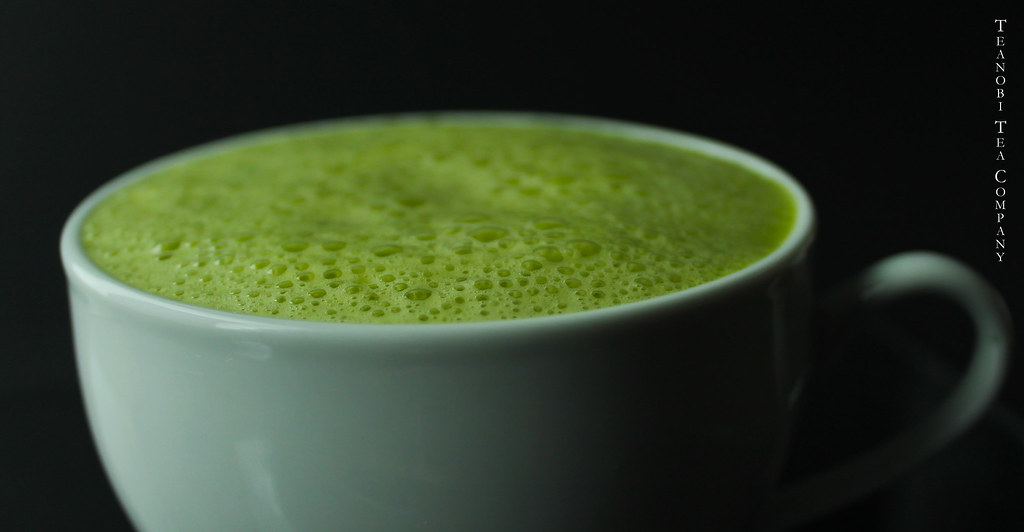
Mocha drinkers want chocolate, roast, and the dark warming register that makes coffee feel like a treat. Hojicha is the tea that lands there, and most people expecting something green-tea-adjacent are surprised by how directly it hits the chocolate-and-caramel zone.
Hojicha starts as a Japanese green tea. It's then roasted at high heat - traditionally over charcoal - until the leaves turn dark brown. That roasting does two things simultaneously: it creates caramel, smoky, and chocolate-adjacent flavor compounds through the same chemistry that darkens coffee beans, and it significantly reduces the caffeine content because caffeine evaporates from the leaf during the high-heat roasting process. Hojicha ends up in the unusual position of tasting like a dark roast while carrying very little caffeine. For anyone who wants the flavor of a mocha without the afternoon anxiety spike, a hojicha latte is the most direct path across the menu.
The Second (and Third) Steep: What Loose Leaf Changes
Loose leaf tea comes back. Coffee grounds are spent after one use. Loose leaf, handled right, gives you multiple rounds - and the flavor shifts in ways worth knowing about.
- Black teas (Assam, Darjeeling, Keemun): Generally yield a strong first steep and a softer, sometimes sweeter second. Keemun, a black tea from Anhui province in China with wine-like qualities and notes of smoke, orchid, and dried fruit, tends to let the wine character come forward on the second steep, where the first is more savory-smoky. Two steeps is typical.
- Pu-erh: Often improves across several steeps. Experienced drinkers sometimes rinse the first pour and treat the second steep as the real opening. Three or four steeps is common, each revealing different layers of the earthiness.
- Oolong and green teas: The most forgiving category. High-quality oolongs often yield three to five steeps, each shifting - creamier, then more floral, then subtler and cleaner. The third steep can be the most interesting one in the session.
- Matcha: The exception. Matcha comes from tencha - tea plants shade-grown for roughly three to six weeks before harvest, which significantly boosts chlorophyll and L-theanine production. After harvest, the leaves are dried, de-stemmed, and stone-ground into a fine powder. When you whisk matcha, you suspend the whole leaf in water rather than steep and discard it. There's nothing to restep. You've already consumed the entire leaf.
Tea bags don't restep for a reason: they're filled with fannings, the finest particle grade of processed leaf, which exhausts completely in a single brew and has almost nothing left to give afterward. If the 'I need more' instinct drives a second or third coffee, loose leaf addresses that without starting over from scratch.
How to Tell Your Barista What You Want
You don't need to know the tea menu to order well. Five words are enough, and we can take it from there.
- Body: Do you want something that feels substantial in the mouth, or something light and clean? Full body points toward pu-erh or Assam. Light and clean points toward first flush Darjeeling or a lightly oxidized oolong.
- Brightness: Do you want a sharp, citrusy, or floral edge? High brightness is Darjeeling or Earl Grey. Low brightness is hojicha or pu-erh.
- Sweetness: Natural sweetness without added sugar, or neutral? Cold-brew oolong and hojicha tend to read as sweet. Assam reads as savory-bold.
- Warmth: Do you want spice, roast, or earthiness? Warmth points toward masala chai, hojicha, or pu-erh.
- Boldness: Does it need to stand up to milk, or are you drinking it straight? Milk-forward orders do best with Assam, Earl Grey, or a masala chai base.
Say your coffee order and add one modifier: "I usually get cold brew and I want something smooth and a little sweet." That's enough. The translation is quicker than it sounds.
The Neighborhood Advantage
An algorithm can suggest a tea based on flavor keywords. An online retailer can sell you a sampler. Neither can watch you take the first sip and say "actually, try this one instead."
The useful thing about a counter where both drinks live side by side is that the comparison is live. We know what our cold brew tastes like today, and we know what the cold-brew oolong tastes like today, and we can make the translation in real time. If the hojicha latte is almost right but needs something, we can adjust. If you hate the first flush but can describe why, we know where to go next. Come in with your coffee identity. It's a perfectly good starting point.